
Why Choose Us?
Take some time to see why our product beats the competition!
-
Most builders use smooth-shank nails; we use ring-shank nails. The rings on a ring-shank nail bite into the wood and create mechanical resistance, so they hold tighter and resist pull-out far better than smooth shanks. That improved holding power increases long-term stability, reduces loosened fasteners and squeaks, and helps the deck resist seasonal movement and load stresses. For decks and other exterior projects where durability and safety matter, ring-shank nails provide a stronger, longer-lasting connection than smooth-shank nails.
-
Nail stitching is a technique we use when connecting beams, making lap connections, and toenailing joists. By shooting in a crisscross type pattern with an opposite angle creates a full on locking method, stitching distributes load across multiple fasteners while also locking into position. When combined with RingShank nails, the connection becomes significantly stronger and longer lasting: the ringed shank increases withdrawal resistance and resists loosening from repeated loads and seasonal movement.
When done correctly, nail stitching with RingShank nails produces a reliable, long-lasting connection that outperforms standard toenailing or straight shoot fastening methods.
-
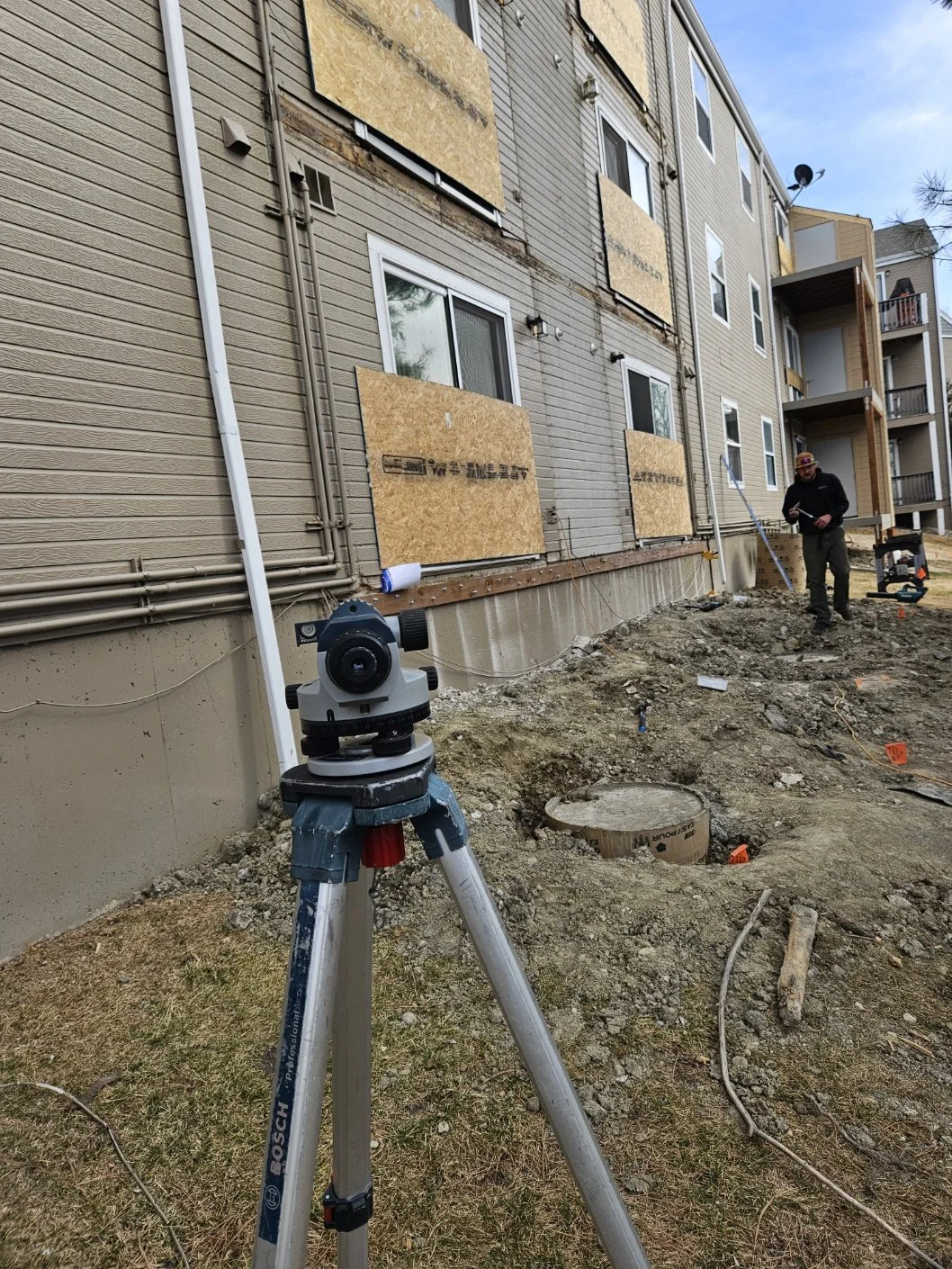
We use a transit to ensure every project is perfectly flat and level. Unlike a hand level, a transit measures true grade across the entire yard to 1/16 of an inch, so adjustments are based on precise readings rather than “eye” estimates or trying to line up a bubble with a distant mark. Most builders don’t use a transit because the instrument is expensive and requires training to operate correctly. If your contractor is relying only on a traditional level, it’s extremely unlikely the deck will be perfectly level—accurate, repeatable precision across a site is essentially impossible without a transit.
-
Where two beam assemblies meet, many builders simply butt the sandwiched 2x members together. At Mile High Decks we take the extra time to stagger the boards so one beam extends past the other and interlocks — a finger-locking style joint. This detail resists separation, rolling, and failure at the connection, increasing long-term strength and stability in the feature.
-
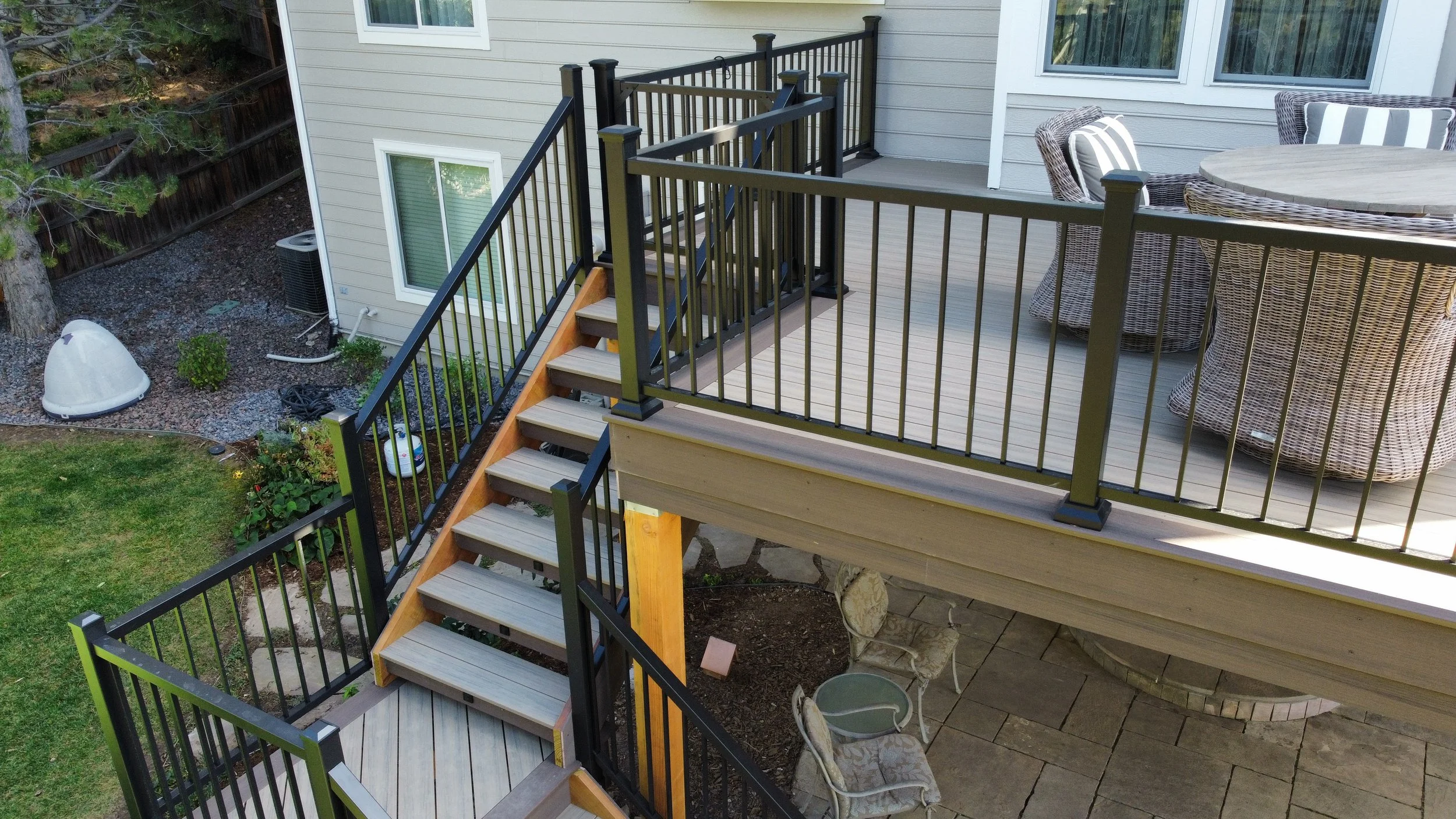
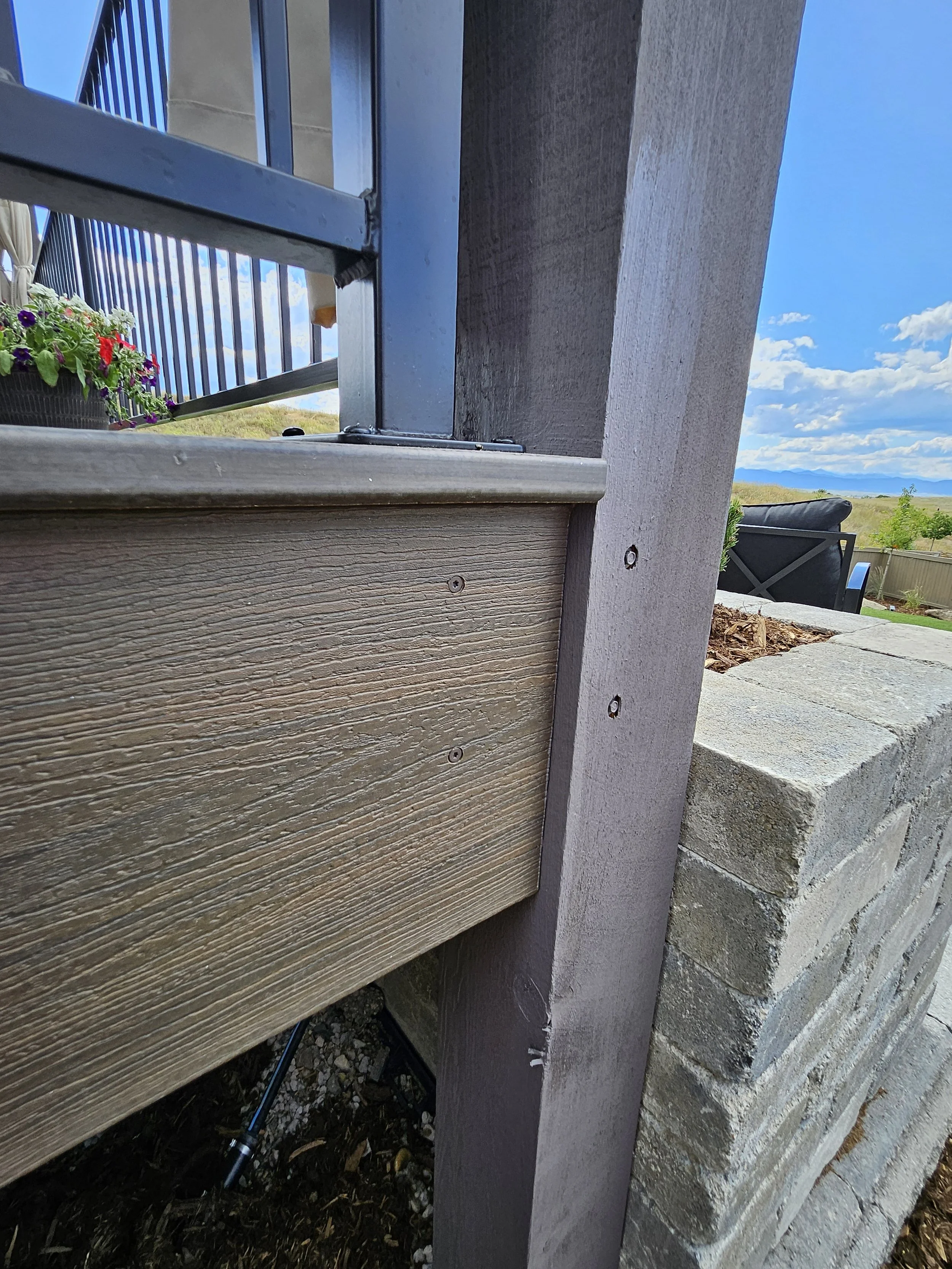
We do a Boader on all of our decks. Not just because it looks great — because it protects your deck.
A Boader creates a clean water-shed over the skirt board and rim joist, directing runoff away from the joints where debris and moisture collect. Without that protection, leaves, dirt and trapped water can get between the deck boards and the rim/skirt boards, accelerating rot and causing fastener and structural failure.
-
We also apply high-quality flashing tape where water and debris can intrude between framing members to prevent moisture penetration and future rot. This ensures critical seams and joints stay sealed over time, extending the life of the structure and reducing maintenance needs.
More Info Coming Soon!
-
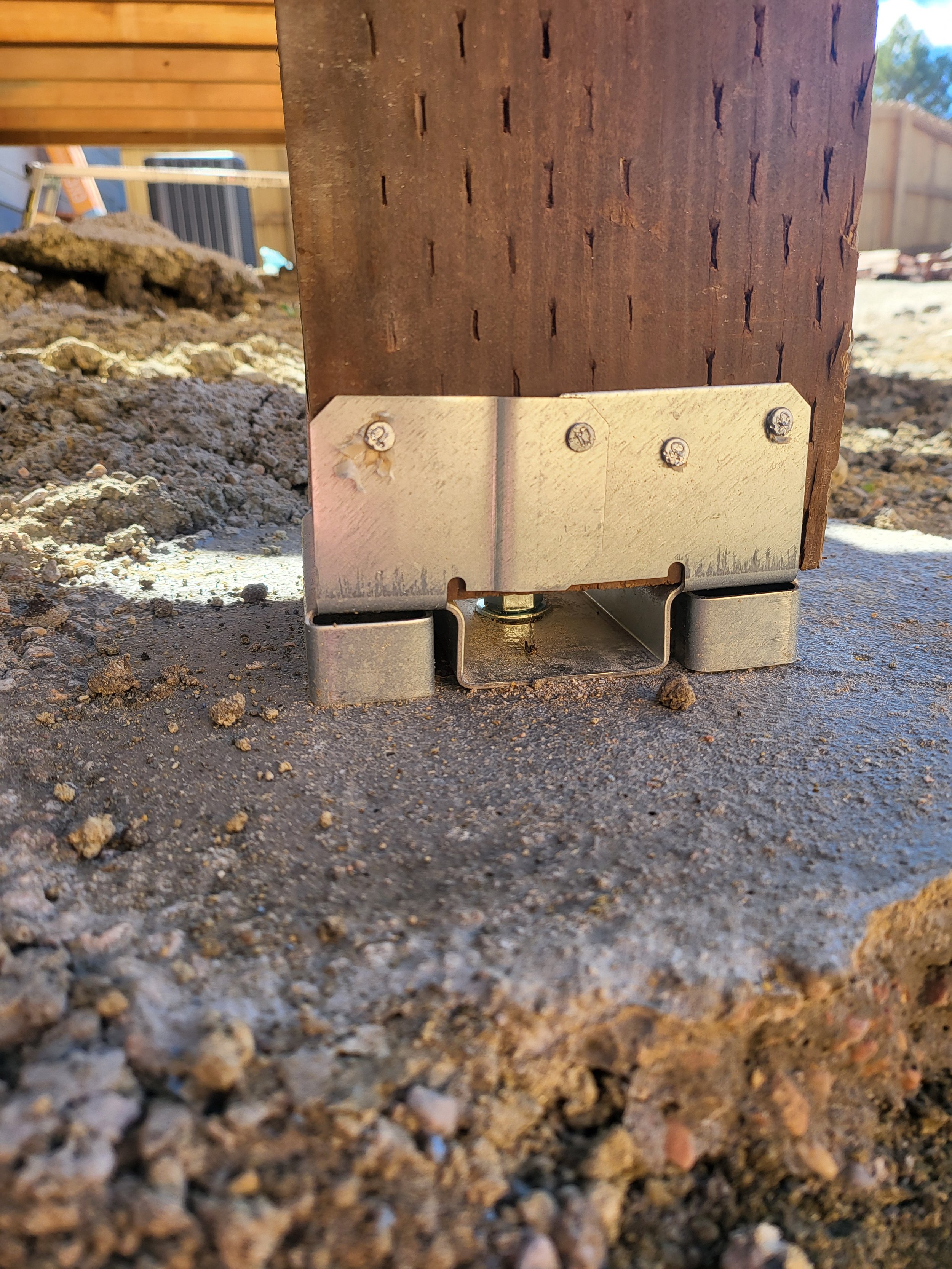
We get asked a lot by customers who built their decks years ago: “Why are posts set into concrete back then” - Now code requires post bases. Modern post bases lift the wood off the concrete so water can flow underneath the post. That prevents moisture from wicking up into the post and rotting the most critical part of your structure. Installing an approved metal post base or bracket extends the life of the post, meets current building code, and helps protect your deck’s safety and value.
We install the best quality post base where most are using the cheapest on the market.
The post base is held to the case on with a concrete anchor and tico nails secure the post to the base.
-
We use a concrete mixer rather than wheelbarrow mixing because consistent, properly mixed concrete matters for long-term performance. Wheelbarrow mixing more commonly seen often produces an uneven mix, which can lead to structural failure over time. We've also seen contractors cut corners by adding old concrete chunks, rocks, or other debris to save money — practices that compromise strength and durability. We prioritize quality and longevity in every job, so we always mix concrete correctly to ensure reliable, long-lasting results.